Wilmington, DE & the Brandywine Valley
Dog Spleen Removal Surgery in Wilmington, DE
High-complexity abdominal removal of the spleen due to trauma, rupture, hematoma, or tumor.
- 30-40% below referral hospitals
- Scheduled within days
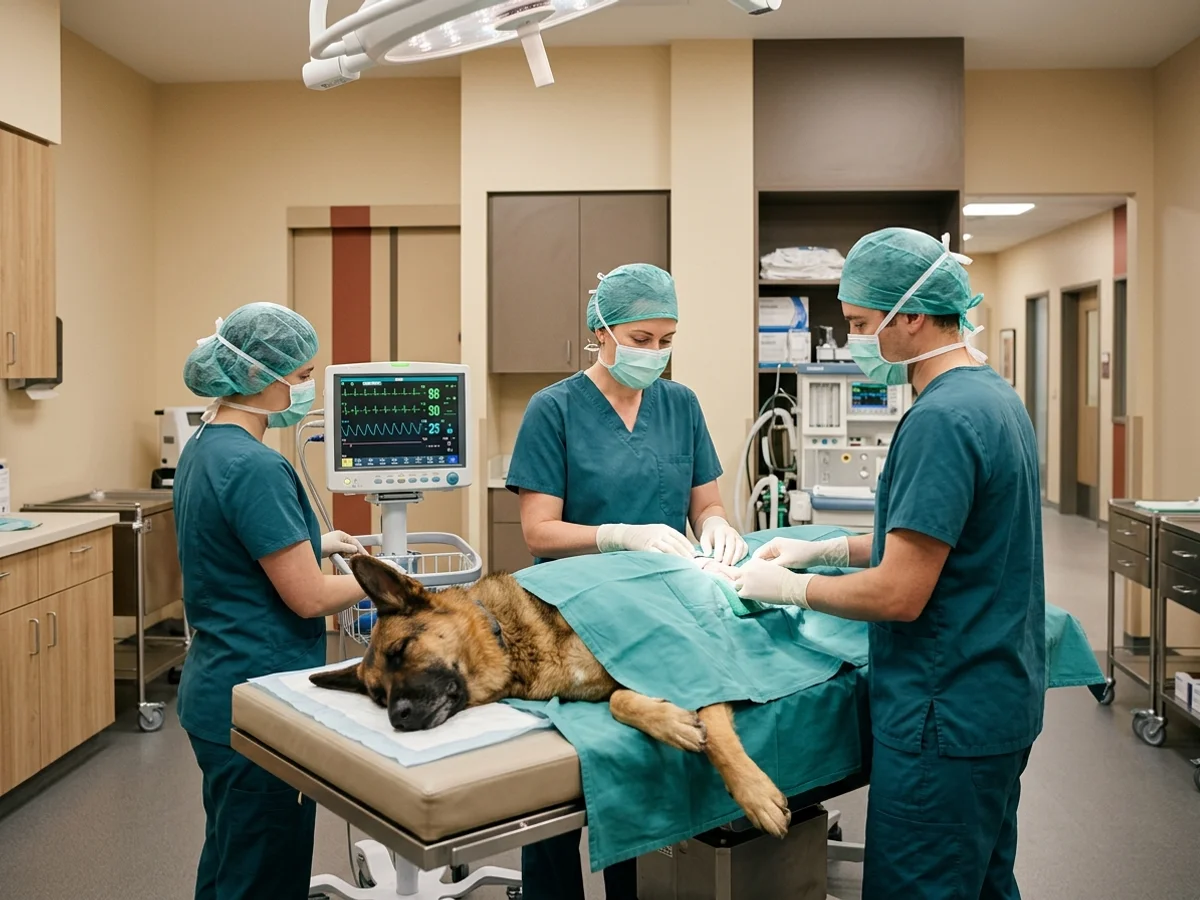
- Full anesthetic monitoring
Starting Price
$1,500
Credential 01
4.9★ Google (150+ reviews)
Credential 02
Surgery Within Days
Credential 03
30-40% Below Referral Hospitals
Credential 04
Pre-Anesthetic Bloodwork & Full Monitoring
What Is a Canine Splenectomy?
A splenectomy is the surgical removal of the spleen. In dogs it is performed for four main reasons: a splenic mass, a splenic hematoma, acute rupture after trauma, and hemoperitoneum - internal bleeding into the abdomen from a ruptured spleen.
It is one of the higher-complexity procedures in veterinary soft tissue surgery, for two reasons. The splenic vessels at the hilum are large and sit in fragile tissue, so haemorrhage control has to be fast and secure. And splenic disease carries a genuine association with cardiac arrhythmia, which changes how the anesthetic and the recovery are managed. Brandywine Valley Dog Surgery performs canine splenectomies at our Wilmington, Delaware practice for dog owners across New Castle County, including Brandywine Hundred, Greenville, and Hockessin. Every case includes pre-anesthetic blood screening and continuous ECG monitoring as standard.

When Does a Dog Need Spleen Removal?
Two very different pictures bring dogs to us.
The emergency. A dog collapses suddenly, has pale gums, is weak, and may have a visibly distended abdomen. This is a bleeding spleen filling the abdomen with blood. It is time-critical.
The incidental finding. A splenic mass is picked up on an ultrasound performed for something else entirely, in a dog who seems completely well. This is the better version, because it allows for planning, staging, and a proper conversation before surgery. We see both presentations regularly from dog owners in Wilmington, Newark, and the wider Brandywine Valley.
| The emergency | The incidental finding | |
|---|---|---|
| How it presents | Sudden collapse, pale gums, weakness, distended abdomen | No symptoms - found on a scan done for something else |
| What is happening | A bleeding spleen filling the abdomen with blood | A splenic mass, not yet bleeding |
| Urgency | Time-critical | Allows planning and staging |
| Before surgery | Stabilisation first: IV fluids, transfusion if the PCV has fallen far enough | Full workup: ultrasound, thoracic radiographs, baseline bloodwork |
| Conversation with you | Compressed into minutes | Unhurried, before anything is booked |
The 50/50 rule
About half of canine splenic masses are benign. No scan can tell you which half your dog is in. Histopathology after removal is the only definitive answer, which makes surgery both the treatment and the diagnosis.
Pre-Surgical Diagnosis and Staging
Abdominal ultrasound characterises the splenic lesion and checks the liver, which is the most common site for spread if the mass is a hemangiosarcoma. Thoracic radiographs look for pulmonary metastasis. Bloodwork establishes a baseline packed cell volume so we can measure ongoing blood loss against it.
Where a dog is actively bleeding, stabilisation comes first: IV fluid support, and a transfusion where the packed cell volume has fallen far enough to warrant it.

How the Surgery Is Performed
The spleen is approached through a midline abdominal incision. Hilar vessel ligation is the core of the procedure: the splenic artery and vein and their branches are secured - the Brandywine Valley surgical team uses surgical hemoclips for speed and reliability on the larger vessels - and the spleen is removed intact where possible, so the mass is not disrupted during handling.

While the abdomen is open we perform a full abdominal exploratory, examining the liver, the other organs, and the omentum. If there is a second lesion, we would far rather find it now than three weeks from now. In deep-chested breeds at elevated risk of gastric dilatation-volvulus, a prophylactic gastropexy can be performed during the same anesthetic.
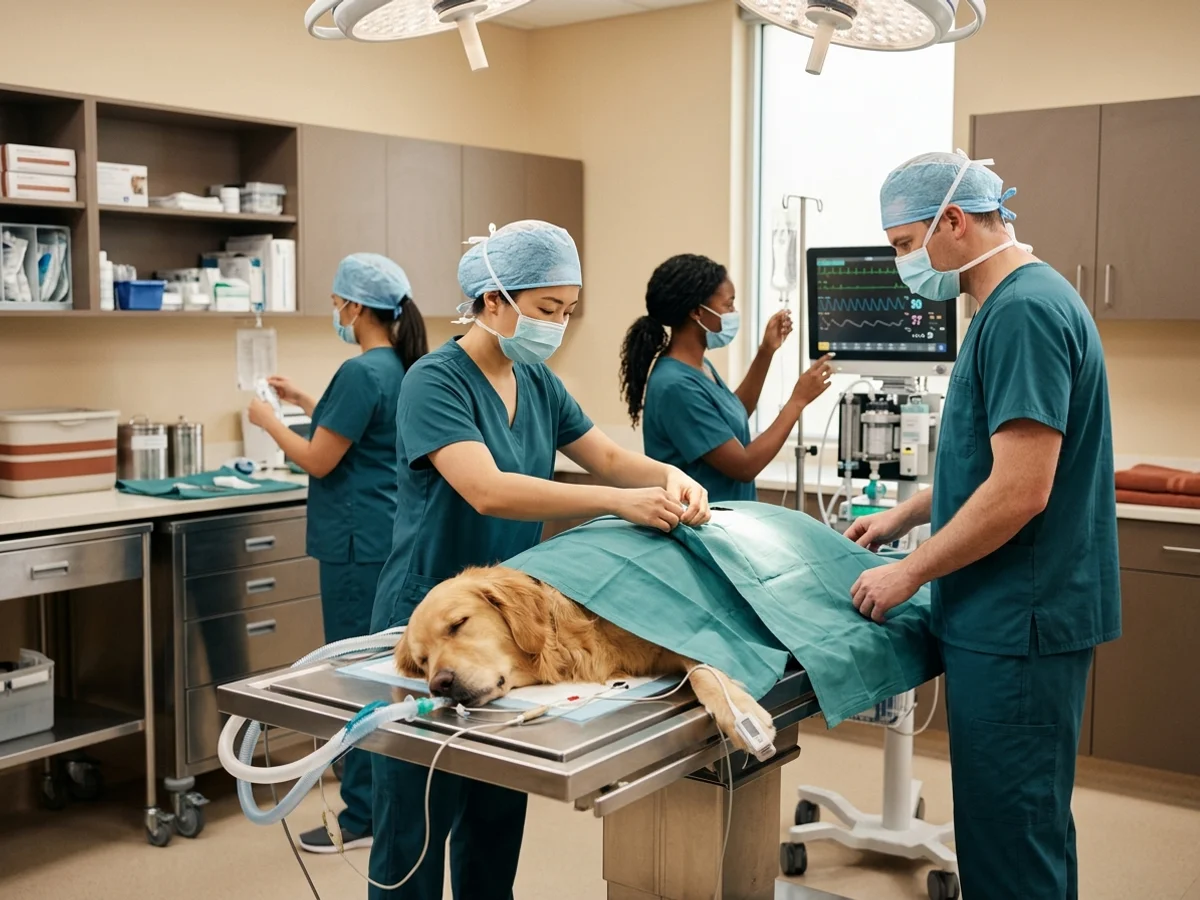
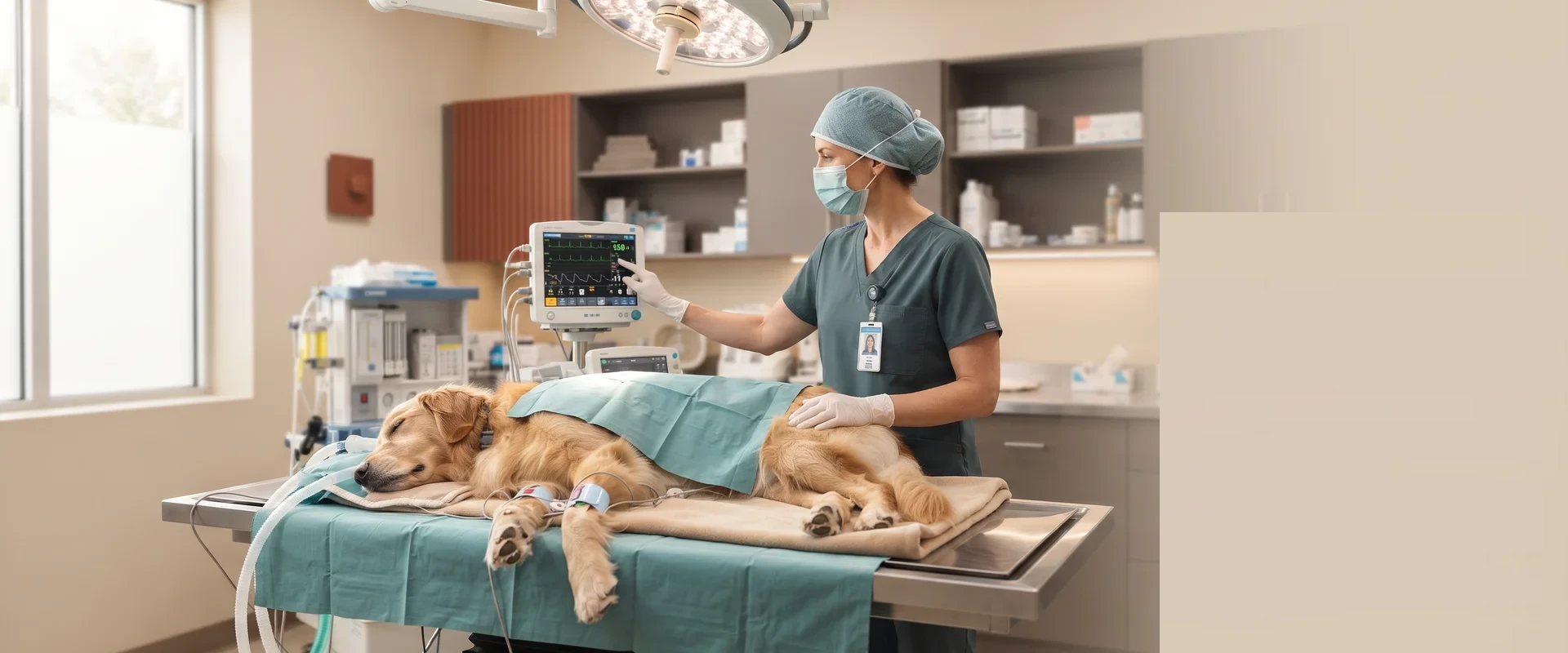
Throughout, continuous Lead II ECG watches for ventricular premature contractions (VPCs). These are common in splenic cases, most are self-limiting, and a proportion need intervention - which is only possible if someone is looking.
Recovery and Aftercare at Home

Post-op PCV and lactate monitoring continues through the early recovery period. A falling packed cell volume signals ongoing bleeding; a rising lactate signals poor tissue perfusion. Both show up in the numbers before they show up in the dog.
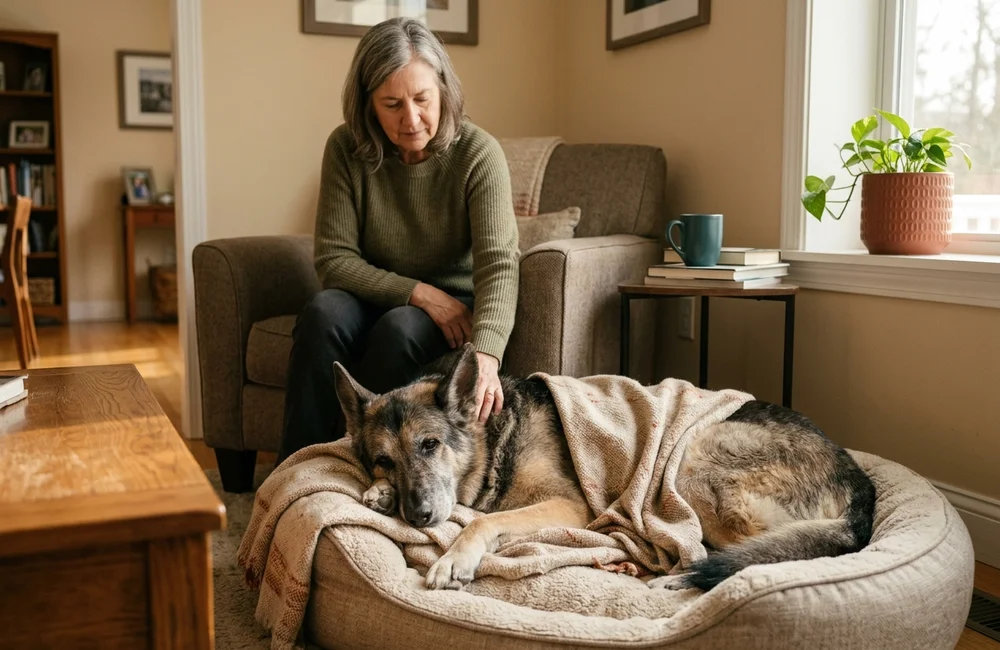
Most dogs go home within a day or two. Activity is restricted for two weeks. The signs that need an immediate call are pale gums, weakness or collapse, a distended abdomen, or refusing to eat.
Histopathology results typically return within a week and determine whether the splenic mass was benign (hematoma or nodular hyperplasia) or a malignancy such as hemangiosarcoma. We will explain the findings plainly, including what the realistic picture is for your dog and what your options are if further treatment is needed.
How We Compare
| Feature | Typical Referral Hospital | Brandywine Valley Dog Surgery |
|---|---|---|
| Splenectomy cost | $3,000 - $5,000 | From $1,500 (2026) |
| Surgical scheduling | 4-6 week wait | Within days |
| ECG monitoring | Often an add-on charge | Included on every case |
| Post-op PCV/lactate tracking | Varies by facility | Standard protocol |
| Follow-up evaluation | Billed separately | Complimentary 10-14 day check |
Price Ledger
How much does splenectomy cost?
Splenectomy pricing reflects the complexity and the monitoring required. Emergency cases with significant blood loss need more support.
Starting From
$1,500
starting
Included in the price
- Pre-anesthetic blood screening including PCV
- Anesthesia with continuous Lead II ECG monitoring
- Hilar vessel ligation with surgical hemoclips
- Full abdominal exploratory where indicated
- Post-operative PCV and lactate monitoring
- Home-recovery medications, discharge checklist, and healing evaluation
Quoted separately
- Abdominal ultrasound and thoracic radiographs
- Histopathology of the removed spleen (strongly recommended)
- Blood transfusion where significant haemorrhage has occurred
Nothing gets added to your bill without your approval first. Ask for the written estimate before you commit.
We accept cash, credit card, and CareCredit financing. If cost is the barrier to treating your dog, tell us when you request a booking.
Why Us For This Surgery
Why owners choose us for splenectomy
01
Continuous ECG on every splenectomy
Splenic cases develop ventricular premature contractions at a meaningful rate. Watching for them during and after surgery is not optional, and it is included.
02
Hemoclips, not just ligatures
The splenic hilum carries large vessels in a fragile mesentery. Surgical hemoclips give fast, secure control where speed matters.
03
We look at the whole abdomen
A splenic mass is a reason to check the liver and the rest of the abdomen while we are there. Finding a second lesion afterwards helps nobody.
04
Honest prognosis conversations
About half of splenic masses are benign. We will not guess for you, and we will not overstate either direction before the histopathology comes back.
Procedure Ledger
How splenectomy works
What happens from your first booking request through to your dog's follow-up evaluation.
Step 01
Diagnosis and staging
Abdominal ultrasound identifies the splenic lesion and checks the liver. Thoracic radiographs look for spread. Bloodwork establishes the baseline packed cell volume.
Step 02
Stabilisation
A dog with hemoperitoneum from a bleeding spleen is losing blood into its own abdomen. Fluid support and, where needed, transfusion come before anesthesia.
Step 03
Splenectomy with ECG monitoring
The splenic vessels are ligated at the hilum with hemoclips and the spleen removed intact. Continuous Lead II ECG watches for the arrhythmias these cases are prone to.
Step 04
Post-operative monitoring
PCV and lactate are tracked through recovery. Most dogs go home within a day or two and are back to normal within two weeks.
Need splenectomy for your dog?
Send us the details and we will confirm honest pricing and the soonest surgical date, usually within days.
Deeper Reading
Splenectomy guides
Plain-language answers to the questions owners ask before booking this surgery.
process
Dog Splenectomy Recovery: The First 14 Days
A first-14-days recovery guide after canine spleen removal: PCV/lactate monitoring, activity restriction, and warning signs to watch.
Read guidecost
Dog Splenic Mass Surgery Cost in Delaware
Canine splenectomy pricing in Delaware, diagnostic add-ons, and GP-network savings versus referral hospitals.
Read guidequalifier
When Does a Dog Need Spleen Removal Surgery?
Splenic mass, rupture, hemoperitoneum, hematoma: the indications for canine spleen removal and emergency vs planned surgery.
Read guideFrom the Practice Journal
Real splenectomy cases and safety standards
Case write-ups and practice updates covering what owners most often want reassurance about.
Owner Ledger
What owners say about our splenectomy
Rated 4.9 across 150+ reviews from dog owners across the Brandywine Valley.
Review 01
“We were quoted more than double for a splenectomy at a referral hospital. Same monitoring, same standard of care, far more honest pricing here.”
Alan P.
Greenville, DE
Review 02
“Our shepherd collapsed on a Sunday. They saw the ultrasound, explained the odds honestly rather than selling us hope, and operated fast. She's still with us.”
Dana M.
Wilmington, DE
Review 03
“The ECG monitoring afterwards caught an irregular rhythm early. Nobody at the previous practice had even mentioned that risk.”
Owen J.
Wayne, PA
Service FAQ
Splenectomy questions
01When does a dog need a splenectomy?
The main indications are a splenic mass, a splenic hematoma, acute splenic rupture after trauma, and hemoperitoneum (free blood in the abdomen from a bleeding spleen). Some dogs present as an emergency, having collapsed suddenly with pale gums. Others are found on a routine ultrasound with no symptoms at all. In both cases, a spleen that is bleeding or likely to bleed needs to come out.
02Is a splenic mass always cancer?
No, and this is the most important thing to understand before you decide. Roughly half of canine splenic masses turn out to be benign, hematomas or nodular hyperplasia. The other half are malignant, most commonly hemangiosarcoma. No imaging can reliably tell them apart. Only histopathology of the removed spleen gives you an answer, which means surgery is both the treatment and the diagnostic step.
03How much does dog spleen removal cost in Wilmington?
From around $1,500 (2026 pricing), including pre-anesthetic blood screening, anesthesia with continuous Lead II ECG monitoring, the splenectomy itself, post-operative PCV and lactate monitoring, and medications. Imaging and histopathology are quoted separately. Referral hospitals routinely price this procedure at two to three times our figure.
04Can a dog live a normal life without a spleen?
Yes. The spleen filters blood and stores red cells, but the liver and bone marrow take over those functions comfortably. Dogs who have had a splenectomy live normal lives with normal energy. There is no special diet and no long-term medication required for the absence of the spleen itself.
05Why does my dog need ECG monitoring?
Splenic disease is strongly associated with ventricular premature contractions (abnormal heartbeats originating in the ventricles). They can appear during surgery or in the 24 to 48 hours afterwards. Most are self-limiting, but a proportion need treatment, and you cannot treat what you are not watching for. Continuous Lead II ECG runs throughout the procedure and into recovery.
06What is the recovery like?
Most dogs are home within a day or two and comfortable quickly, with two weeks of restricted activity while the abdominal incision heals. We monitor packed cell volume and lactate through the early recovery because those numbers reveal ongoing bleeding before it becomes obvious. Warning signs at home are pale gums, weakness, a distended abdomen, or collapse, all of which need an immediate call.
07When do the biopsy results come back?
Histopathology typically returns within about a week. We will call you with the result and explain what it means for your dog either way, including what a hemangiosarcoma diagnosis realistically involves and what your options are.
08Is my older dog too old for this surgery?
Splenic disease is largely a disease of older dogs, so age alone cannot be the deciding factor. What matters is organ function and cardiac status, both of which we assess before surgery. A bleeding spleen left in place is not a safer option than removing it.
09What is the life expectancy after dog spleen removal?
For dogs with a benign splenic mass such as a hematoma or nodular hyperplasia, life expectancy is generally not reduced by the surgery. These dogs return to normal activity and live out their natural lifespan. For dogs diagnosed with hemangiosarcoma, the prognosis is more guarded - without further treatment, median survival after splenectomy is roughly two to three months. With chemotherapy, some dogs survive six months or longer. Histopathology of the removed spleen is the only way to know which outcome applies.
10How long can a dog live with a splenic mass without surgery?
A splenic mass carries a real and unpredictable risk of rupture. Once it ruptures, the dog bleeds into the abdomen and can collapse within hours. There is no reliable way to predict when a mass will rupture, so leaving a known splenic mass in place is a gamble with a short and uncertain timeline. Most veterinary surgeons recommend removal once a mass is identified, whether or not the dog is showing symptoms.
Still have questions about your dog?
Send us the details and we will come back with a straight answer, an honest price, and the soonest surgical date we can offer.
Request Surgery BookingCross Reference
Related surgeries

Urgent surgeries scheduled within days
Ready to book splenectomy?
Honest pricing, full anesthetic monitoring, and a surgical date in days. Serving Wilmington DE, Newtown Square PA, and Newark DE.
- 30-40% below referral hospitals
- Scheduled in days, not weeks
- Full monitoring on every case